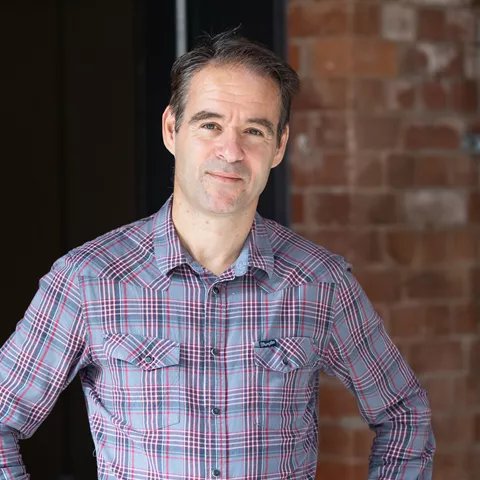
As part of our commitment to developing the next generation of analytical talent, we’re pleased to introduce a placement analyst who has joined Jaywing on a year-long placement. With a strong quantitative background and a growing interest in how analytical techniques support risk decisions, they are already contributing fresh perspective to our modelling and credit risk projects. In this edition of 15 Minutes With…, they share what attracted them to Jaywing and the areas of credit risk and analytics they’re keen to develop during their time with us.
What drew you to pursue a placement specifically in credit risk and analytical modelling?
I’ve always enjoyed working with data throughout university, so I knew I wanted a placement that involved analytics and modelling. I didn’t know a lot about credit risk before joining, but it stood out to me because it plays such a significant role across the financial sector. It felt like an area where I could learn a great deal and see how data is used in meaningful situations. The chance to apply what I’d learned at university while getting exposure to a completely new domain was a major part of what drew me to the role.
What about Jaywing’s work or approach resonated with you when you were considering placement options?
I liked that Jaywing works across a wide range of client projects, which made me feel I’d gain exposure to different parts of credit risk. That has definitely been the case so far, and it’s helped me learn quickly. I was also reassured by the support structure: having a buddy, having people to ask, and knowing the environment would be collaborative. Since joining, everyone has been friendly and willing to help.
I also noticed that the company seemed to be growing and onboarding new clients, adding to the team and developing new tools. It felt like a place where I’d be able to develop and where there was energy behind the work being done.
What were your first impressions of the environment (the people, the projects or the way the team works)?
My first impression was how welcoming everyone was. People introduced themselves quickly and made sure we settled in properly, which made the start far less overwhelming. I also noticed how collaborative the team is. People communicate well and are always happy to answer questions. The projects were varied from the beginning, which helped me feel involved almost immediately.
Which aspects of analytical problem-solving or quantitative work have you found yourself gravitating toward so far? And what are you working on?
I really enjoy looking through data, spotting patterns and trying to understand why certain behaviours take place. Examining variables and how they relate to one another is something I’ve always found interesting.
At the moment, I’m working on a project with a well-known British bank, looking at the factors that might influence whether an active account becomes inactive and the other way around. It’s been a good way to understand customer behaviour and apply some of the analytical skills I’ve developed at university.
Have any parts of the credit risk or modelling workflow been particularly interesting or unexpected?
I didn’t realise how many regulations and rules sit behind credit risk. Even at a basic level, understanding the components that go into a model has been very interesting, especially coming in with limited prior knowledge. I’ve also enjoyed seeing the full modelling process, from cleaning and preparing data at the start, through to understanding how models are validated.
Is there a project, task or concept you’ve encountered that has sparked your curiosity?
A model validation project recently caught my interest. I was genuinely surprised by the amount of work involved in building a model: the volume of data, the feature selection, the iterations, the calibrations and then the validation process itself. Seeing each stage laid out showed me how many decisions and checks sit behind a model before it’s ever put into use. It’s been valuable to understand that entire workflow.
What skills or analytical approaches from your degree have been most valuable in this setting?
Statistics and probability have been the most useful, especially interpreting results, understanding relationships between variables and thinking logically about what the data is showing. I’ve also been doing a lot of data cleaning, deciding which variables to use or remove so the model remains manageable without losing quality. Looking at graphs and outputs to identify trends has also been a big part of the work. Many of the tasks build on ideas I’d seen before, but applying them in a practical setting has been the biggest difference.
Looking ahead, what areas of risk modelling or data analytics would you like to deepen your experience in?
I’d like to build a stronger overall understanding of credit risk — the regulations, the different stages and the methods that are commonly used. I want to develop a clearer picture of how everything fits together. I’m also keen to keep improving my modelling skills and get more confident using a wider range of tools and software.
Are there particular types of challenges or industry topics you hope to work on while you’re here?
I’d like to understand more about the calculation side of credit risk, like how probabilities are determined, what factors feed into those calculations and how they’re used to assess risk. Being involved in projects where those concepts come into play would be really valuable.
I’m also interested in the client side: how requests come in, how teams assess what’s possible and how analysis supports those decisions. Seeing that process would give me a more complete view of how everything works.
What are your early reflections on where credit risk and modelling might be heading?
Techniques like machine learning and AI are starting to appear more often, mainly to support existing processes or help deal with larger volumes of data. It doesn’t feel like sudden change. More like gradual development of new tools alongside the fundamentals.
It seems like a good time to be starting out. The foundations are still the same, but new approaches are being introduced, which makes the work both stable and interesting.
What’s been the most enjoyable or eye-opening part of the placement so far?
The most eye-opening part has been seeing the full process of building and validating a model. I’ve only worked on certain sections, but understanding how much sits behind the final output has been really interesting. Using Archetype has also been enjoyable. It’s very intuitive and makes exploring data and spotting trends much easier. And it’s helped me understand the modelling workflow much more clearly.
Strengthening analytical talent
Our latest placement analyst has made an excellent start, contributing a thoughtful approach to the projects she’s been involved in so far. Her placement year offers a valuable opportunity to build practical experience while strengthening the analytical capability within our team. We look forward to seeing how she continues to grow and the impact she’ll have across our credit and modelling work.