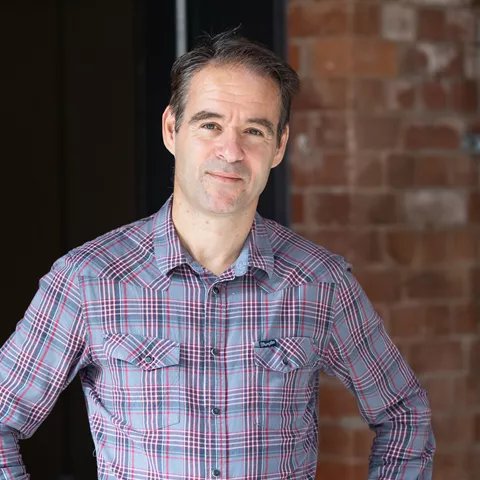
We’re also joined this year by a placement analyst, whose technical skills and interest in data have already made a strong impression. With hands-on experience across Python, SQL, Java and IoT systems, they bring a practical engineering mindset to our modelling and analytics work. In this edition of 15 Minutes With…, they share what drew them to Jaywing and how they’re approaching the next stage of their development in credit risk and data-driven decisioning.
What led you from Software Engineering into an interest in credit risk and data analytics?
Studying software engineering gave me a strong technical foundation, but the more I worked with data — cleaning it, analysing patterns and understanding how it drives decisions — the more interested I became in credit risk and analytics. I realised I enjoy using data to understand behaviour, assess risk and support evidence-based decisions, so moving from pure coding into data-focused work felt like a natural next step.
You’ve worked on projects ranging from IoT systems to database and web development. Which experience has been most useful in your role at Jaywing so far, and why?
My IoT and Data Science coursework have helped me the most. The IoT project taught me how to interpret data streams, and the Data Science module taught me how to turn irrelevant or noisy information into meaningful insights. Both skills have already been useful at Jaywing (for example, in a project where I filtered tender email notifications to remove irrelevant ones).
I’ve also learned a lot from working with colleagues here. Seeing how they structure problems, approach data and build solutions has helped me refine my own technical approach and understand how analytical work supports business goals.
Your “EasyLife” smart-home project used MQTT and automation. What did that teach you about designing reliable, data-driven systems?
Building EasyLife taught me not to trust data blindly. Using MQTT, I had to design around delays, dropped messages and unusual values. I focused on clear topic design, validation and logging so the system could cope with bad or missing data and still behave safely. That experience changed the way I think about designing data-led systems.
How have your technical skills in Python, SQL, Java and database design translated into your work within the modelling and analytics team?
Python and SQL have helped me analyse datasets and extract insights quickly. Java and my understanding of database design make it easier to understand how the backend systems we work with are structured, which helps when interpreting data, validating fields and supporting the modelling process. Overall, those skills have helped me contribute to the team effectively.
What have you found most interesting or challenging about applying an engineering mindset to credit risk problems?
What I’ve found most interesting is seeing how structured problem-solving from engineering applies to credit risk, whether that’s building models or improving them. I’ve realised that even well-written code isn’t enough on its own. The solutions we build need to make sense for the business, be clear to others and meet regulatory expectations. Sometimes the strongest model technically isn’t the right one for the situation, so I’ve had to widen my thinking beyond engineering efficiency.
Has anything about how lenders use data and models surprised you since joining Jaywing?
Yes. I was surprised by how much trust and scrutiny go into every model. I expected more automation, but in reality models go through layers of validation, governance and regulatory checks. It made me realise that even a strong model needs clear documentation and a solid rationale behind it. What stood out to me at Jaywing is the attention to detail across the team to make sure decisions are fair, accurate and well-supported.
Are there particular types of models or parts of the credit lifecycle you’re keen to spend more time on?
I’m interested in early-stage decisions like application risk modelling and affordability assessments, especially how they bring together behavioural data and immediate decisioning. I’m also keen to understand how machine learning can support monitoring models and early-warning systems after a customer has been onboarded.
You mentioned a strong interest in AI and opsation. Where do you see meaningful opportunities for those techniques in credit risk?
AI can automate tasks that used to take days and handle them in seconds: approving safe applications, identifying fraud patterns or helping prioritise customer applications. There’s also strong potential for opsation, such as tailoring credit limits or interest rates using customer-level data.
One way I think about it is: using AI and optimisation can make decision-making faster, more consistent and more personalised.
What skills or perspectives are you hoping to build over your placement year?
I want to get better at combining technical skills with business impact. I don’t mean just writing code, but creating solutions that genuinely address the right problems. I’m also working on explaining logic and results clearly to people who don’t have a technical background.
On the technical side, I want to develop my abilities in data processing, feature engineering and model evaluation, so I can handle messy data confidently and draw meaningful insights from it.
As someone entering the industry now, how do you see credit risk and analytics developing over the next few years?
I think there will be more focus on adaptive and near real-time models, especially as open banking and alternative data become more widely used. There’s also growing pressure for models to be explainable and fair, so combining advanced techniques with transparency will be important.
What would you say to technically minded students thinking about a move into risk and data analytics?
I’d say it’s a great direction to take. Your technical skills matter, but you also see how data influences real decisions. You get to apply coding, modelling and problem-solving in a practical way.
From my time at Jaywing so far, I’ve gained a strong understanding of behaviour, regulation and business strategy. So, it’s a path worth considering.
Building the next generation of analysts
This placement year gives him the chance to apply his technical strengths to complex risk problems, while gaining exposure to the analytical and regulatory context that underpins our work with clients. He has quickly shown the curiosity and discipline needed to thrive in a data-focused role, and we look forward to seeing how he continues to contribute to the team over the coming months.